

Towards a More Operational African Integration
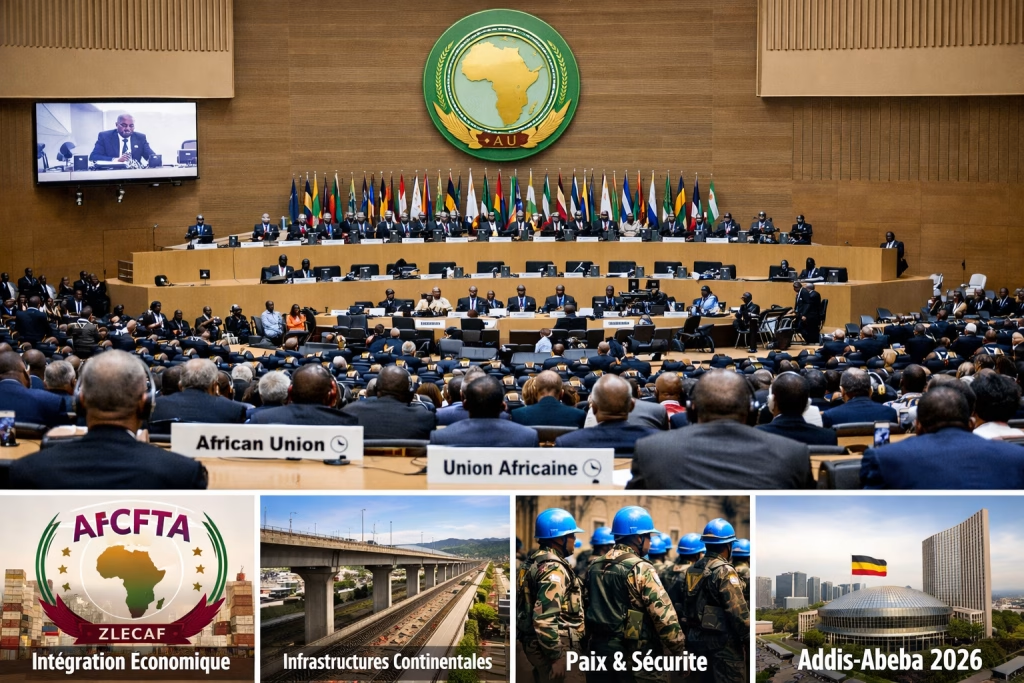
Addis Ababa once again confirms its role as Africa’s diplomatic and strategic capital. During the African Union Summit, heads of state, regional institutions, technical partners, and economic actors gather to define the next steps in African integration.
Beyond official statements, discussions focus on critical structural issues: accelerating the African Continental Free Trade Area (AfCFTA), developing regional infrastructure, facilitating trade, promoting industrialization, and enhancing economic resilience.
The objective is clear: strengthen intra-African trade, reduce external dependency, and build competitive continental value chains.
From Political Ambition to Economic Execution
Africa does not lack vision or market. With over a billion consumers and a growing entrepreneurial ecosystem, the potential is immense.
However, effective economic integration relies on several key pillars:
- Interconnected logistical and energy infrastructure
- Trade finance mechanisms adapted for cross-border commerce
- Reliable commercial information and trust systems
- Strong coordination between public and private actors
The success of the AfCFTA depends not only on signed agreements but on the ability of ecosystems to collaborate concretely and sustainably.
THE NIL AFRICA’s Strategic Role
In this context, THE NIL AFRICA can play a key role as a platform for economic intelligence and strategic connectivity across African actors.
Its role can be structured around several axes:
1️⃣ Facilitate Qualified Connections
Bridge companies, investors, institutions, and decision-makers to transform intentions into actionable partnerships.
2️⃣ Structure Strategic Information
Provide analysis, sectoral data, and business intelligence to help economic actors better understand regional opportunities.
3️⃣ Promote Intra-African Value Chains
Highlight regional synergies and foster cross-country collaborations in priority sectors: agro-industry, energy, logistics, digital, and manufacturing.
4️⃣ Support Execution
Beyond the pan-African narrative, contribute to structuring concrete, measurable, and results-oriented initiatives.
Africa in a Transformational Phase
The current moment marks a turning point. Integration dynamics are no longer solely institutional—they are economic, technological, and entrepreneurial.
The challenge now is to move:
- From declarative integration to operational integration
- From framework agreements to real commercial flows
- From fragmented markets to a functional continental market
Addis Ababa sets the strategic direction.
Ecosystems like THE NIL AFRICA can help turn these ambitions into actionable results.
Africa has the market.
The task now is to make the system work — efficiently and at continental scale.