

Africa is entering a new phase in its economic development. For decades, African countries have traded more with external markets than with each other. Today, this reality is gradually changing as the continent strengthens its integration and builds new trade infrastructure.
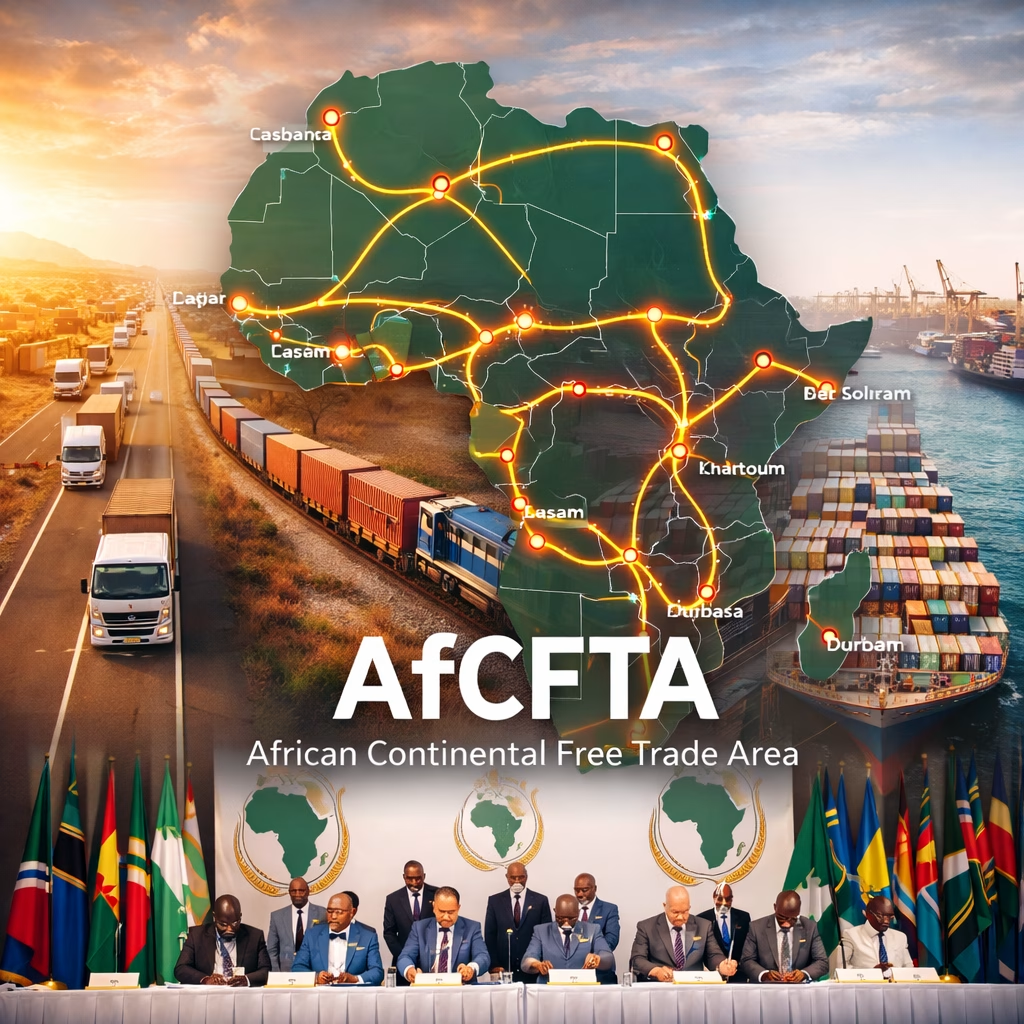
The launch of the #AfCFTA (African Continental Free Trade Area) represents one of the most important economic transformations in Africa’s modern history. By creating the largest free trade area in the world by number of participating countries, AfCFTA aims to remove barriers to trade and encourage stronger economic cooperation between African nations.
A New Infrastructure for African Trade
Beyond trade agreements, Africa is also building the financial and digital infrastructure necessary to support this transformation.
The #PAPSS (Pan-African Payment and Settlement System) is helping simplify cross-border payments across African countries. Instead of relying on foreign currencies and external financial systems, African businesses can increasingly trade directly with one another.
At the same time, digital platforms such as #AfricaTradeGateway are emerging to support the exchange of trade information, facilitate customs processes, and improve transparency across supply chains.
Together, these initiatives are strengthening the foundations of #IntraAfricanTrade, making it easier for businesses across the continent to buy, sell, and distribute goods.
The Role of African Institutions
This transformation is supported by major continental institutions.
The vision of the #AfricanUnion and its long-term development strategy #Agenda2063 aims to create a prosperous and integrated Africa driven by its own citizens.
Development frameworks such as #NEPAD continue to support infrastructure development and economic cooperation across the continent.
Meanwhile, financial institutions including #Afreximbank and the #AfDB (African Development Bank) are playing a critical role by financing trade, logistics infrastructure, and regional value chains.
These institutions are helping create the economic environment necessary for African businesses to thrive.
The Importance of Logistics and Distribution
While trade agreements and financial systems are essential, efficient logistics networks remain one of the most important components of successful regional trade.
Transportation corridors, modern warehouses, special economic zones, and distribution hubs are key elements that allow goods to move efficiently across borders.
Without strong logistics infrastructure, the benefits of free trade agreements cannot be fully realized.
The Vision of THE NIL AFRICA
At #TheNilAfrica, our mission is to contribute to this new era of African trade by strengthening logistics and distribution networks across the continent.
By connecting producers, logistics hubs, and markets, we aim to facilitate the movement of goods and support the development of regional supply chains.
Africa’s future economic growth will depend on its ability to trade more within the continent, build efficient infrastructure, and create strong partnerships between businesses and institutions.
The transformation has already begun.
And the next chapter of African trade will be written by those who build the systems, networks, and infrastructure that connect the continent.