

Africa is experiencing a major transformation in its trade and economic landscape. With the implementation of the #AfCFTA (African Continental Free Trade Area), the continent is moving toward a more integrated and interconnected market.
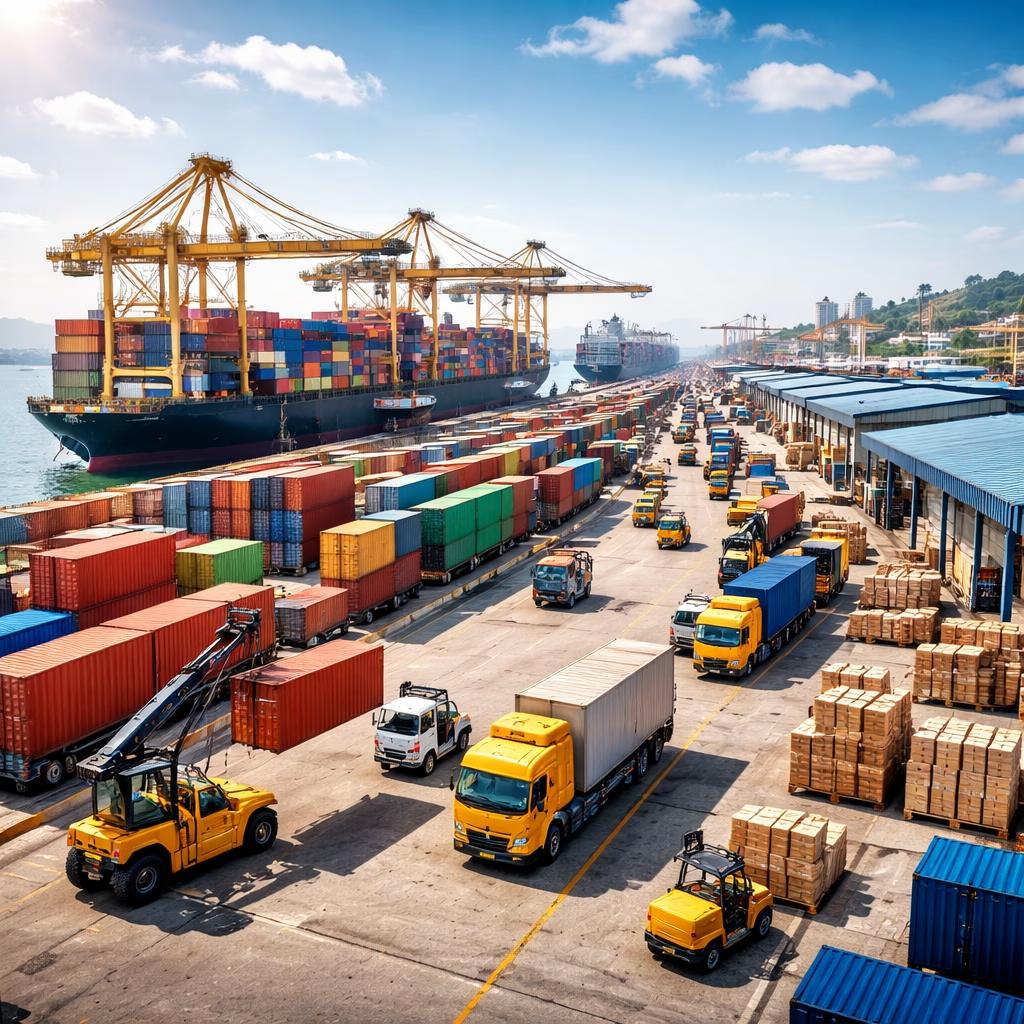
However, trade agreements alone cannot unlock the full potential of African commerce. One of the most critical factors in enabling economic growth across the continent is logistics infrastructure.
The Logistics Gap in Africa
Many African countries face challenges when it comes to moving goods efficiently across borders. These challenges include:
- limited transportation infrastructure
- complex customs procedures
- high transportation costs
- fragmented supply chains
As a result, moving goods within Africa can sometimes be more expensive than exporting them to other continents.
Building Modern Logistics Networks
To unlock the full potential of African trade, the continent must invest in:
- modern warehouses and distribution centers
- cross-border transport corridors
- digital logistics systems
- efficient customs processes
These elements are essential for creating efficient regional supply chains.
The Role of THE NIL AFRICA
At #TheNilAfrica, we believe that building strong logistics networks across Africa will be essential for the future of intra-African trade.
By connecting producers, logistics hubs, and regional markets, logistics platforms can help reduce trade barriers and accelerate economic growth.
Africa’s next economic revolution will not only be digital or industrial — it will also be logistical.